
On one side, OpenAI is burning through 600 billion dollars while its top executives fight behind closed doors. On the other side, Anthropic just watched its yearly revenue explode to 19 billion dollars, only to have its servers melt down under the weight of its own success. With IPOs looming, the two giants of Silicon Valley are locked in the most expensive and nerve-wracking race for computing power the tech world has ever seen.
Just yesterday, rumors that GPT-6 is coming spread like wildfire.
Sources say the model, codenamed Spud, will launch soon as a unified agent that combines ChatGPT, Codex, and the Atlas browser into one smart system.
The reason Sora got cut? OpenAI is pouring every resource it has into GPT-6.
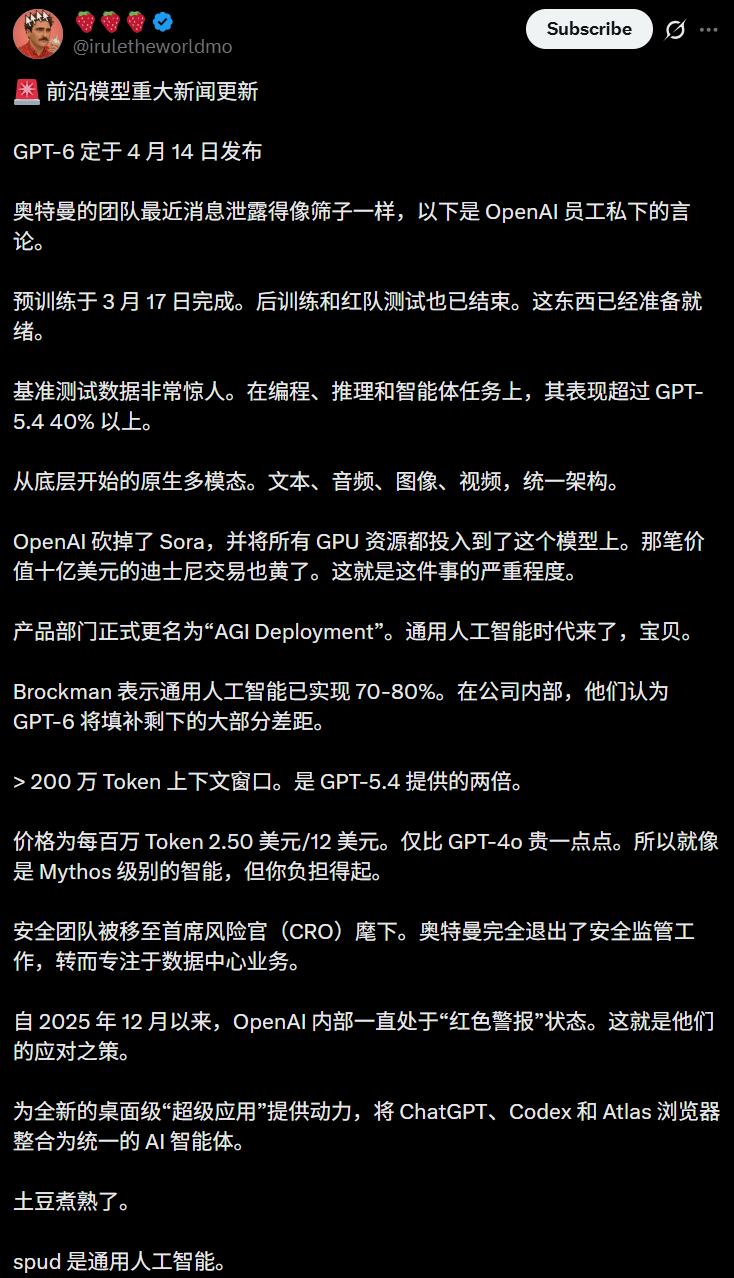

Even though the rumor has been denied, it has not cooled the excitement one bit.
At the same time, Anthropic’s Mythos, the model that shocked the internet when first revealed, is now stuck in development hell because of computing costs.
The Information reported that the computing power needed for Mythos is so massive it has caused server gridlock, and a launch may not happen anytime soon.
This means GPT-6 could beat Mythos to market.
The cost of building the next generation of flagship models has grown so high that even the richest tech giants cannot burn cash fast enough.
We have entered the second half of the AI race, where brute force wins. The battle between these two companies is no longer about who has the better algorithm. It is a high-stakes gamble of national importance, raw money, and nerves of steel.
 From 9 Billion to 19 Billion in Three Months, Then the Crash
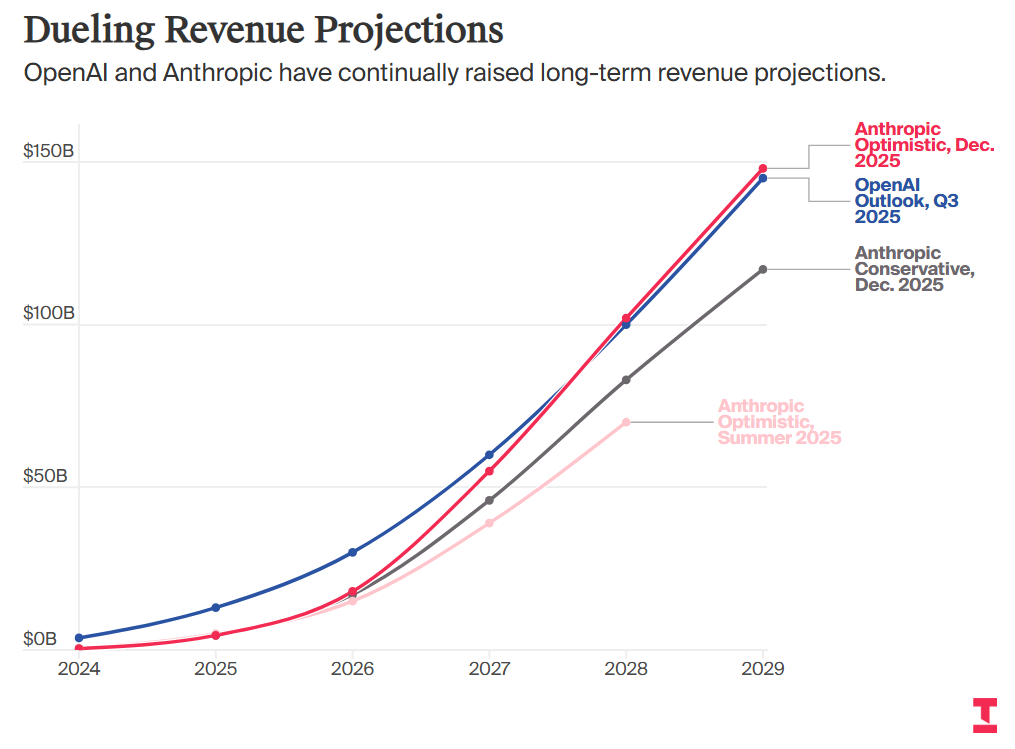
Anthropic’s growth curve this year looks too wild to be real. One glance at the numbers and any investor would jump for joy. The company’s yearly revenue run rate has shot up to 19 billion dollars.
And here is the kicker. That run rate went from 9 billion dollars at the start of the year to 19 billion in less than three months.
Claude Code deserves much of the credit. That single product alone is pulling in 2.5 billion dollars in yearly revenue.
The product is on fire. Eight of the top ten Fortune 500 companies are Claude customers. Over 500 businesses spend more than one million dollars a year on Claude.
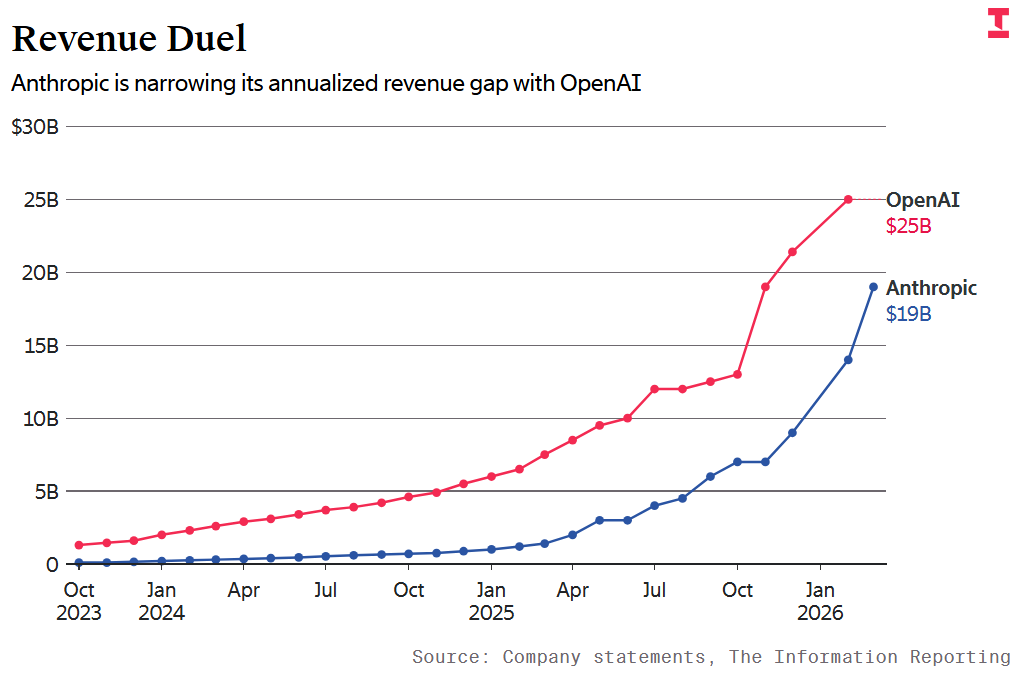
It looked like Anthropic was about to sit at the same table as OpenAI and split the pie.
Then the bill came due.
Anthropic’s wild success created a massive problem. They ran out of servers.
If Claude has felt slow lately, do not blame your internet. Anthropic is genuinely out of stock.

Paying 200 Dollars a Month for 12 Days of Access
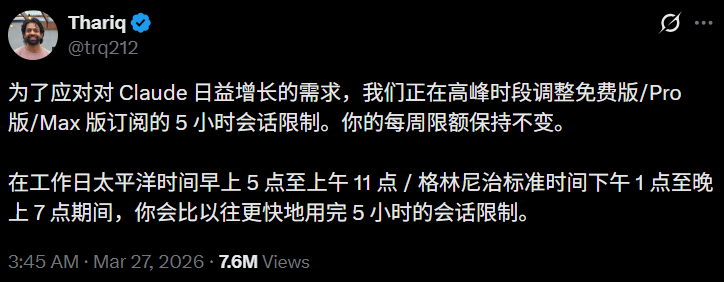
In late March, Anthropic was forced to announce that during weekday peak hours, Claude users would burn through their five-hour session limits faster than before. In plain words, they started throttling users.
Seven percent of users would be affected. And that seven percent just happens to be the highest-paying, heaviest-using professionals.
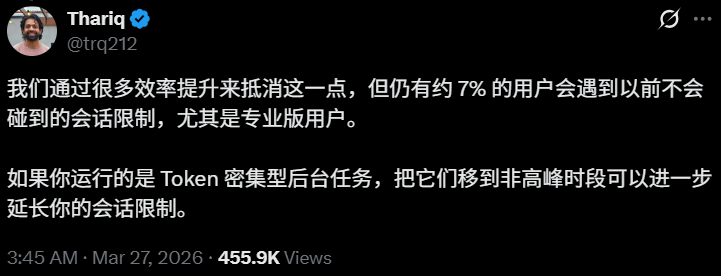
Developers went nuclear. I pay you money and you make me wait in line?
One user on the 100-dollar Max x5 plan said a quota that used to last eight hours now burns out in one hour. Another user drained a five-hour limit in just 19 minutes.
A top-tier subscriber paying 200 dollars a month complained that out of 30 days, Claude only works for 12.
OpenAI is not doing much better. It quietly started limiting how much customers can use its own product Codex, likely to save computing power for the GPT-6 push.
Mythos Is Too Expensive and the Architecture Cannot Handle It
What is really going on? A recent leak of internal messages tells the story.
Anthropic’s next flagship model, Claude Mythos, is a massive model with a brand new architecture. The training cost is sky-high, and the cost of running it for users would be enormous.
One engineer with access to the A cluster sent a warning before the full rollout. The efficiency was terrible. The model simply would not turn a profit.
In other words, even with all the money Anthropic has raised, the numbers do not work. The model costs too much to train and too much to serve.
To put it simply, Anthropic is in a crisis that is also a choice. It is a strategic bet with no easy way out.
While OpenAI signs cloud deals worth hundreds of billions, Anthropic has walked a different path. CEO Dario Amodei insists on a cautious approach. He wants to avoid overbuilding. He worries that if demand does not match supply, the company will be stuck with massive waste.
In a podcast from February, he said he had seen too many AI labs build huge clusters only to have them sit empty. It is a painful mistake, and a huge waste of money.
But here is the irony. Claude became so popular that in February, right after OpenAI signed its massive Stargate deal and ChatGPT saw a wave of user exits, Claude shot to the top of the App Store. Downloads jumped 295 percent. A quarter of a million people joined the QuitGPT movement and switched to Claude.
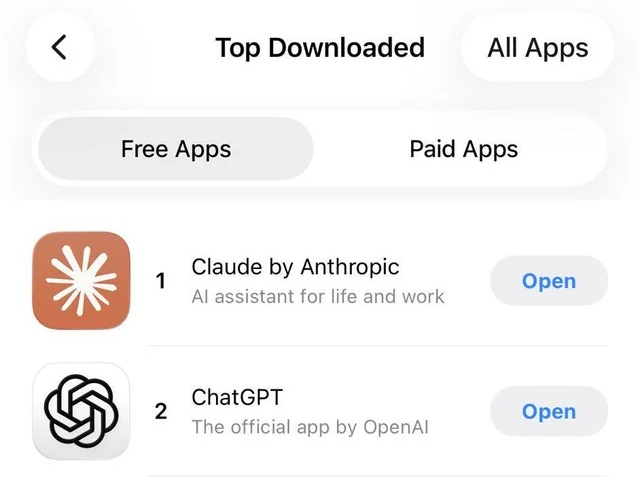
That surge was great for headlines, but it was a nightmare behind the scenes. No one had told Anthropic to prepare extra GPUs for the rush.
Users arrived. The servers were not ready. The engineering team panicked. This was a direct result of Anthropic’s conservative planning.
What can you do when you run out of GPUs? You go to the spot market and buy them at any price.
The problem is that spot market prices can be many times higher than pre-ordered rates. Multiple developers have said that Anthropic is now bleeding money on GPU rentals. Its internal forecast missed by 23 percent. Gross margin has dropped to about 40 percent. For every dollar Anthropic earns, it loses a dollar on GPU clusters.
In public, Anthropic says it is in a neck-and-neck race with OpenAI. In private, the company is so deep in the hole that it is borrowing money from investors just to keep the lights on. Sources say it is using a highly unusual debt structure to stay afloat.
Naturally, investors are getting worried. If these new models keep getting delayed, who will keep pouring money into Anthropic?
Google has already signed a deal with Anthropic worth tens of billions of dollars for a new data center. But those chips will not even be plugged in until early 2026.
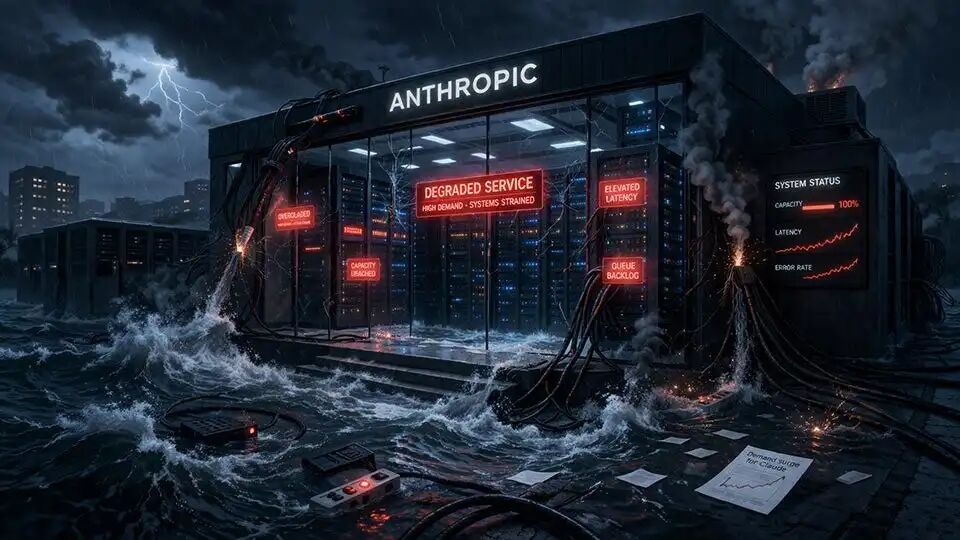
In other words, for a company that is supposed to go public soon, the present is a disaster. The future is a gamble.
And that is not even the worst part. The A cluster road map is so expensive that
 It Is Not the CFO. It Is the Company.
Some insiders say Anthropic’s real problem is that its products are too good and its team grew too fast. Unlike OpenAI, it does not have a battle-tested finance machine.
The person who should be running that machine is CFO Sarah Friar.
Who is Friar? She is a Wall Street veteran. She helped take Square public. She is an expert at managing money for fast-growing tech companies.
But when she joined Anthropic, something felt off from day one. Behind the scenes, the power struggle had already begun.
Sources say that when Microsoft led a new investment round for OpenAI, the news directly affected Anthropic’s fundraising plans. In meetings about the same topic, Friar was always left out.
One board member even said she was too cautious, like a ten-year-old with a piggy bank.
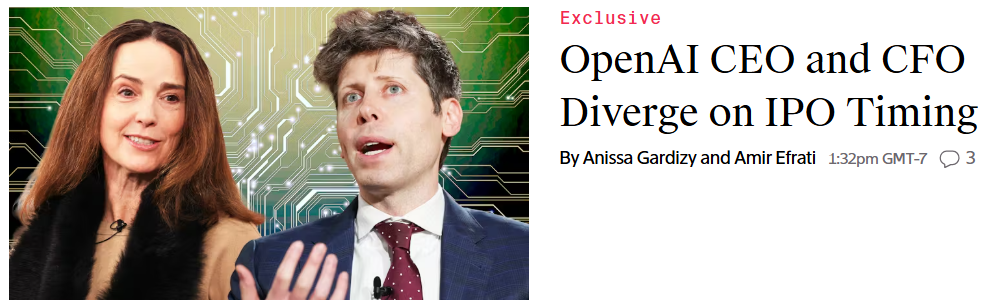
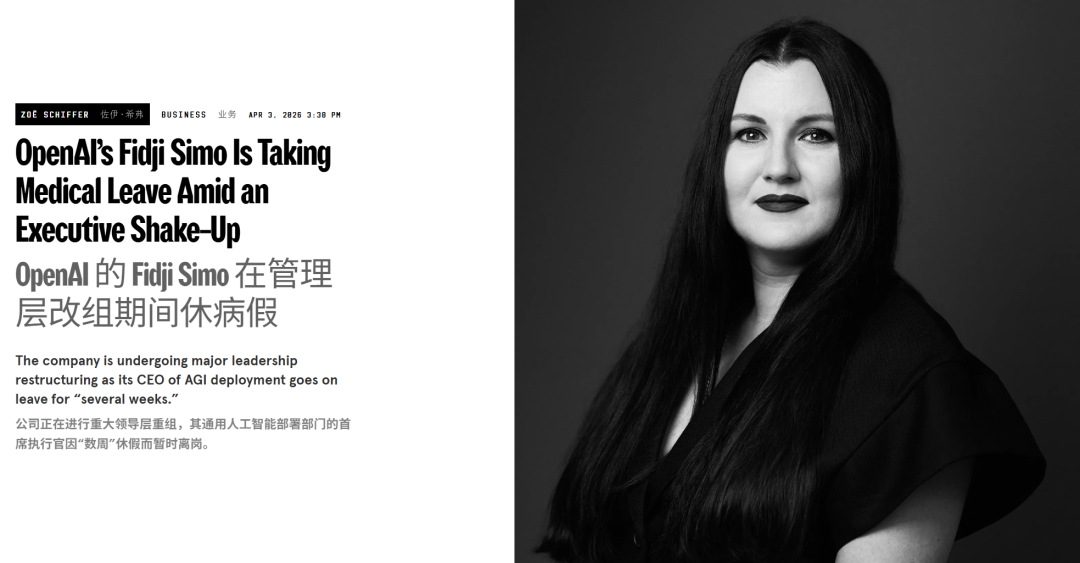
In the past eight months, Friar has never reported directly to CEO Dario Amodei. Instead, she reports to Fidji Simo, the company’s president.
In any normal company, the CFO reports straight to the CEO. This is almost unheard of.
The result? Simo now controls the data. Simo controls the budget.

665 Billion in Cloud Deals and a CFO on the Sidelines
The deeper issue is simple. It is about money.
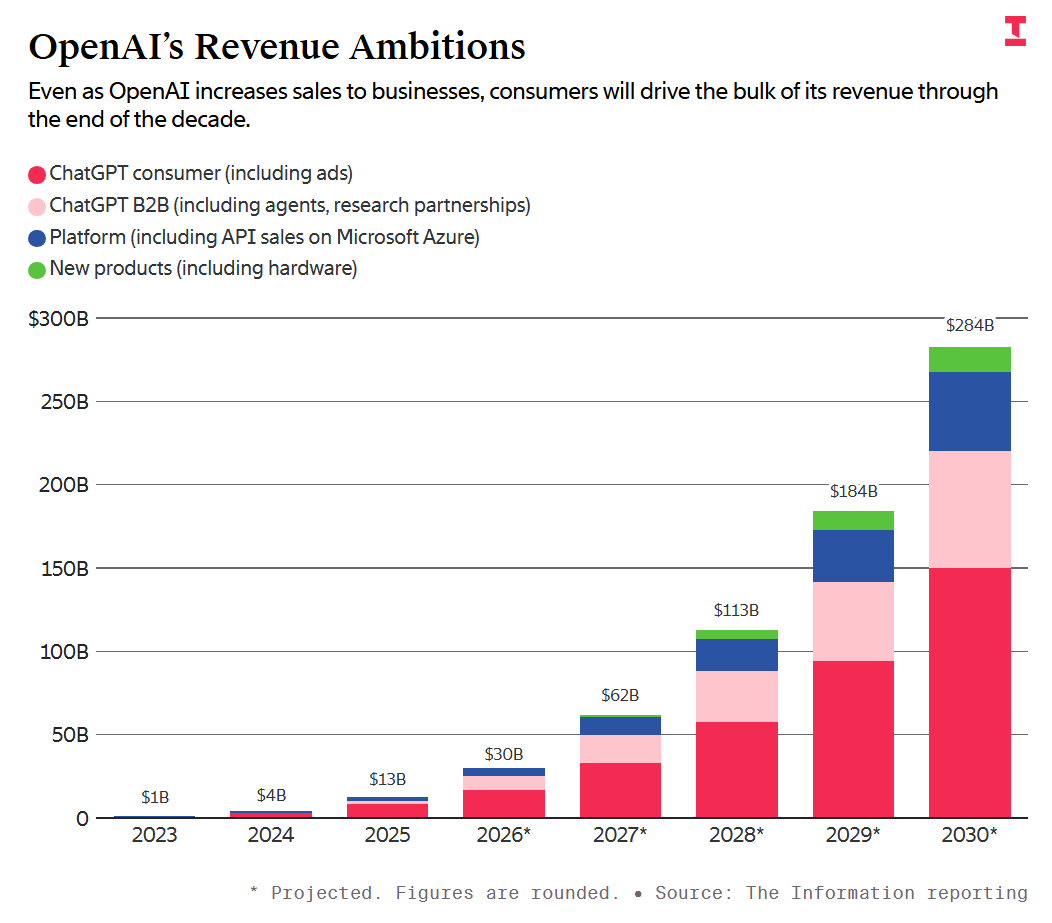
Sam Altman, the man Forbes calls the king of the AI boom, has turned his company into a cash-burning empire. OpenAI’s total computing plan is expected to cost 200 billion dollars a year.
So why does OpenAI need a CFO?
As one insider put it, the job is almost impossible. You are basically a firefighter running from one burning building to the next, and at any moment the whole thing could collapse.
So far, OpenAI has signed cloud contracts worth roughly 665 billion dollars, running through 2030. Oracle is in for 300 billion. Microsoft for 250 billion. AWS for 138 billion.
And here is the catch. In many of these deals, OpenAI has to pay before Anthropic does.
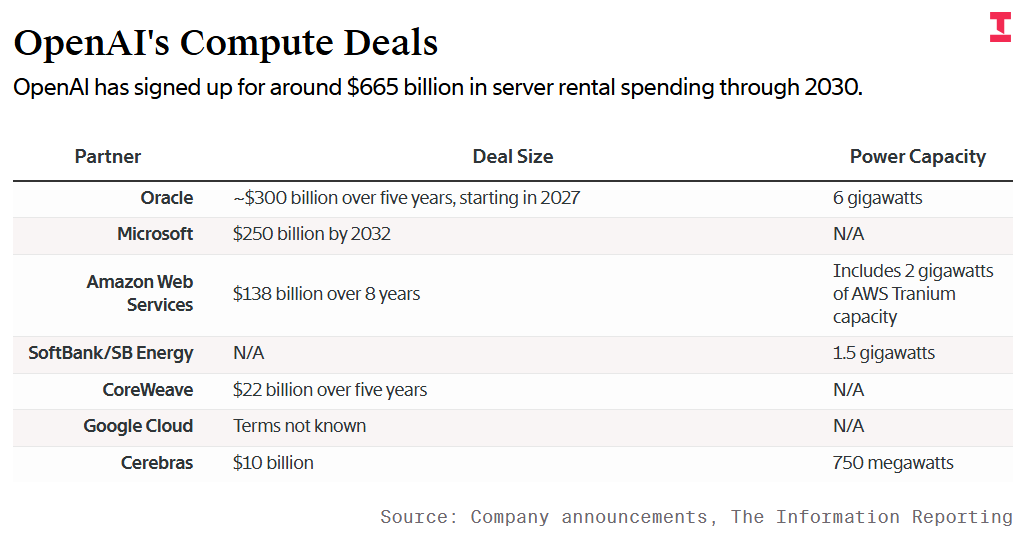
Friar’s private fear, shared with people close to her, is that OpenAI may not be ready for its 2026 IPO. The company needs a complete overhaul of its finance and operations structure. Those changes require time. But the cloud contracts demand massive payments now.
Sources say she has admitted she does not know how many GPUs OpenAI will need in the future. She is not sure if the company can optimize its spending enough to survive these deals.
The funny thing is that the CEO on the other side has said the exact same thing.
At a recent all-hands meeting, Dario Amodei told employees that if the GPU forecast is wrong, many companies will not survive. He said everyone is making the same bet, but few realize they are all gambling.
In short, he pushed the CFO out. But he is saying the same stuff in private.
Friar’s exit was not without warning. At OpenAI, she was building a plane while flying it. She was managing a company that was growing so fast that its finance systems could not keep up.
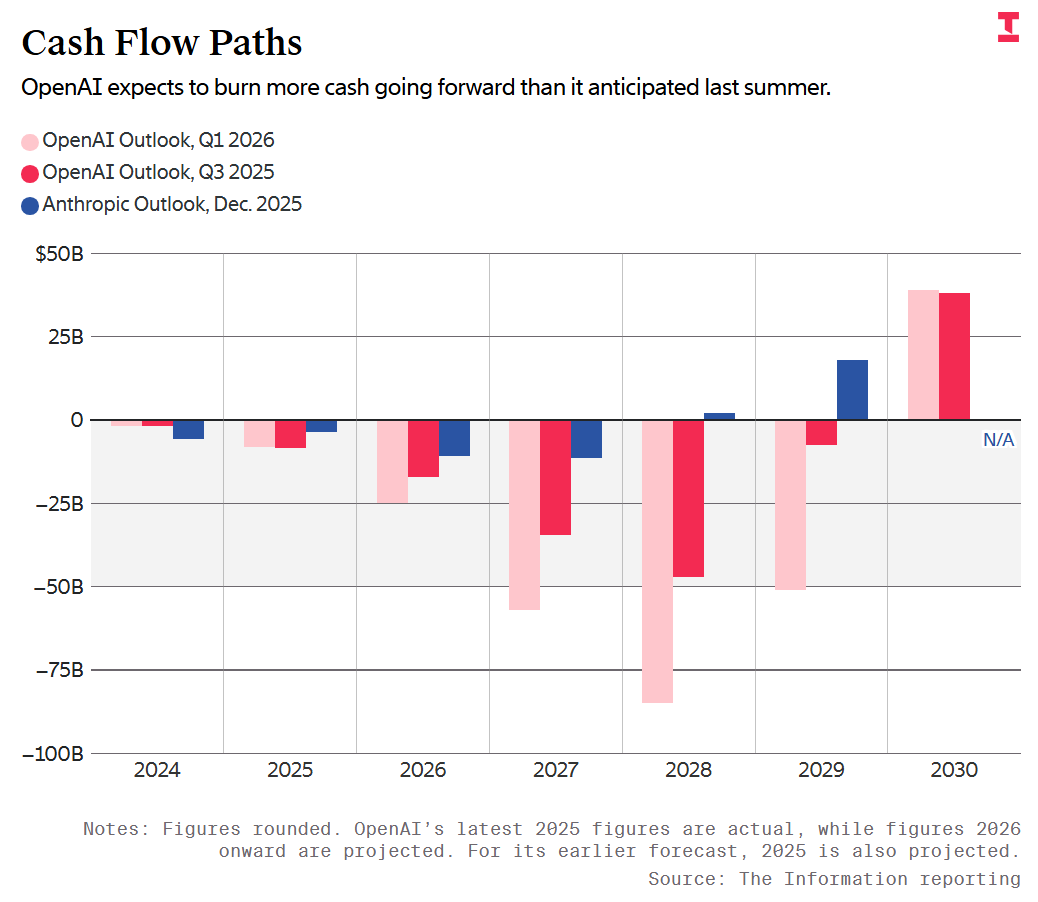
The operating budget was burning cash with no profit in sight. The support commitments for 600 billion dollars in cloud deals were coming due. The company was not ready.
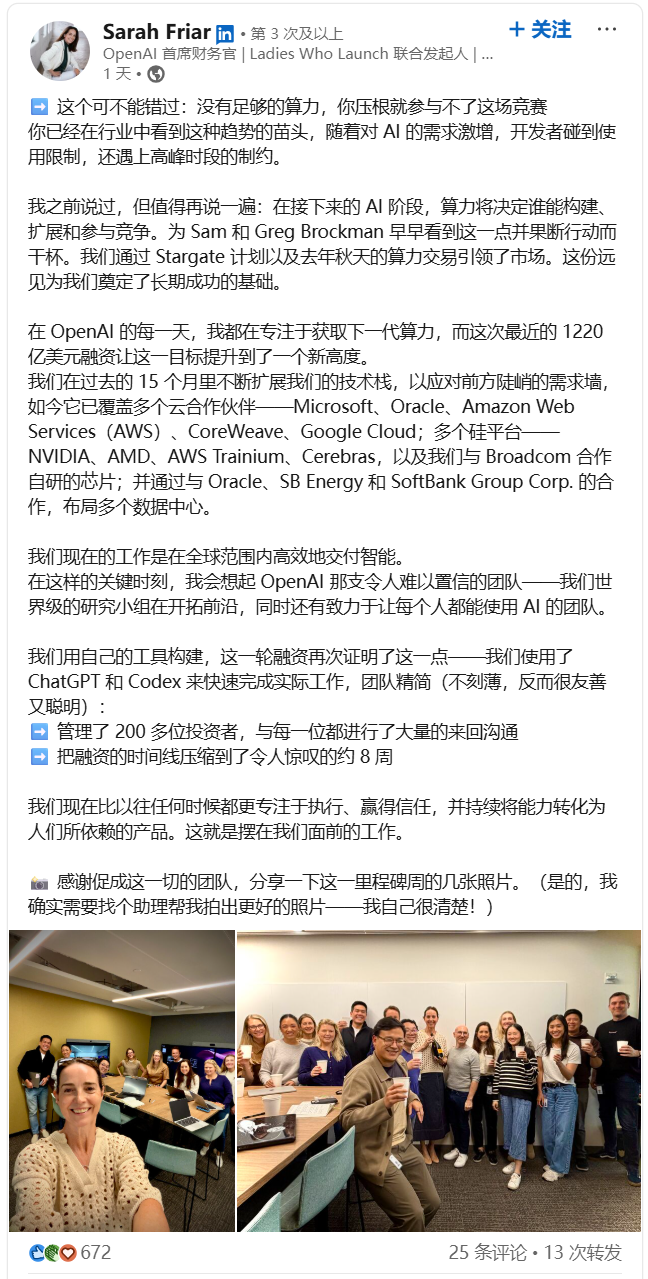
The company raised 12.2 billion dollars in a funding round. On LinkedIn, Friar thanked her team and Greg Brockman and said she was excited for the next chapter. But everyone knew the relationship was already over.
Although OpenAI’s yearly revenue is 25 billion dollars, the private funding round far exceeded projections, stretching all the way to 2030. The burn rate is now more than double the original forecast.
The gross margin has not improved. The reason is simple. The models are too expensive to run, and the product prices are too low. The business only works if usage keeps growing. But if growth slows, the whole thing falls apart.
Friar was right. But being right does not mean you win.
OpenAI’s business model is too heavy. It is spinning out of control.
When Friar joined OpenAI in June 2024, her mission was clear. Make sure the money keeps flowing. Secure funding. Keep investors happy. It was a job built on history, trust, and the art of raising money.

But the reality was too much.
She always thought of herself as a warrior in armor, a knight of Wall Street. But in the end, she could not even keep up with Excel.
One subtle signal came last September when Friar was spotted at a dinner in San Francisco with xAI’s new CFO Mike Liberatore.
Insiders say the dinner was about Friar and Brockman teaming up to build a new investment fund focused on AI infrastructure.
For a company CFO to need outside help, that says something.
 The Big Spender and the Cautious Saver Both Crashed
Silicon Valley has become one giant stress test.
Anthropic is now scrambling to catch up, begging Google for tens of billions of dollars in data center deals to fix its earlier clothes remover ai caution. Meanwhile, OpenAI is trying to solve everything with a historic IPO before its finances blow up.
Step back and you see the truth. OpenAI and Anthropic are two sides of the same coin.
OpenAI’s problem is that it bet too big.
The 665 billion dollars in cloud contracts are not simple server rentals. Some deals require OpenAI to pay years in advance to help cloud providers cumshot ai build data centers. If costs go over budget, OpenAI shares the pain. Insiders say cloud customers agreeing to these terms is almost unheard of.
Anthropic’s problem is that it bet too small.
Its conservative GPU stockpile left it flat-footed when demand exploded. Paying users got a terrible experience. Brand trust took a hit. Competitors are now stealing its customers.
Now both companies are racing to go public first.
OpenAI is aiming for the fourth quarter of this year. Anthropic is looking at the same window, hoping to raise more than 60 billion dollars. Any operational problem that surfaces before the IPO will be priced in by Wall Street at ten times its real weight.
And much of their money ends up in the same pockets.
Amazon invested 15 billion dollars in OpenAI on the condition that OpenAI spends 100 billion dollars on AWS. Nvidia’s investment is mostly GPUs, not cash.
The money spins in a circle between giants. On paper, everyone is growing. Some on Wall Street are already calling it circular financing.
The most ironic part? Every insult Amodei throws at Altman, Friar has said almost the exact same words in private. And Amodei is not much better. He talks about caution, but his systems crashed for the whole world to see.
Altman does not believe in brakes. Amodei does not believe in the gas pedal.
In the end, both companies might pull off successful IPOs. Wall Street never runs out of people willing to bet on the future.
But if we look back two years from now, the cracks that appeared in the spring of 2026 may be where the story turned.
Friar’s private comment that we are not ready may be the most accurate prediction in AI this year.
This is a race with no way out.
The winner will become the infrastructure of the AI age, ruling the future like the power grid. The loser may burn through hundreds of billions of dollars and end up as the most expensive firework in Silicon Valley history.