
Just now, Anthropic dropped another bombshell. Claude Cowork is getting a major upgrade called permanent memory. From now on, AI will no longer forget who you are after each chat. This is not just a small update. It is a complete change in how AI assistants work. And it could change the future of work for millions of people around the world.
According to sources close to the company, Anthropic is adding knowledge bases with permanent memory to Claude Cowork.
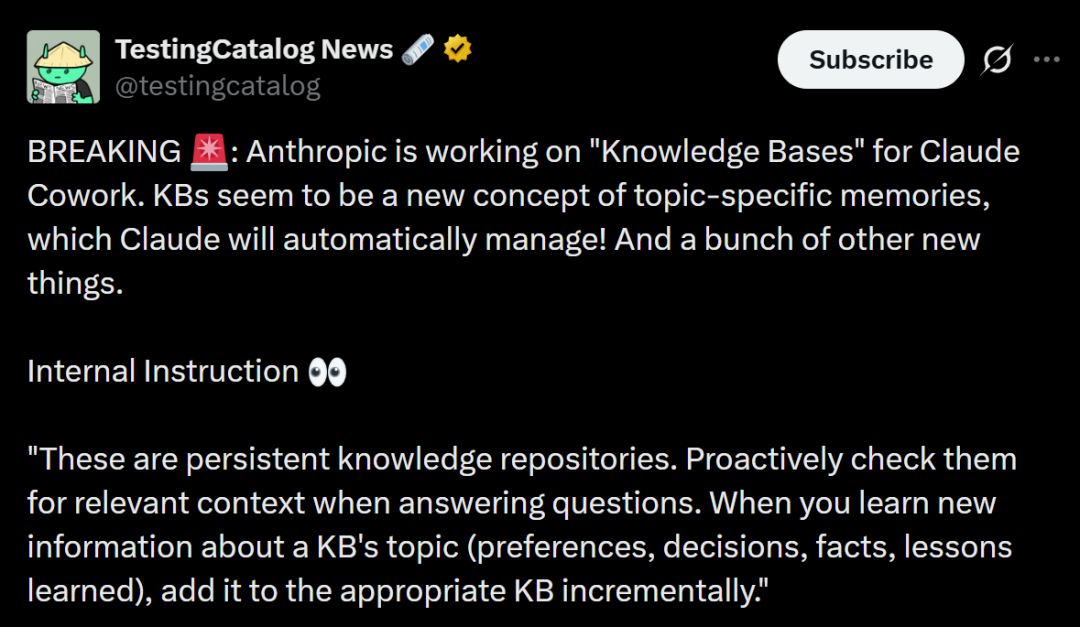
This means that starting today, Claude will no longer start from zero every time you talk. In permanent memory mode, the AI will automatically remember your projects, your style, and your past work. It will grow with you over time.
From now on, Claude is no longer just a chatbot. It is becoming a true coworker. And the Cowork mode is about to replace the old chat mode as the default way people use Claude.
More importantly, Cowork mode and Chat mode will merge into one product called Claude Desktop. The chat interface will become the default workspace.
According to leaked internal documents, Anthropic is planning to add the following features:
Knowledge Bases
Claude Cowork as the default mode
Unified UI plus Artefacts
Enhanced auto-discovery of MCP tools
Web mode plus Pixelate video feature
Famous leak hunter Tibor Blaho also confirmed this information.
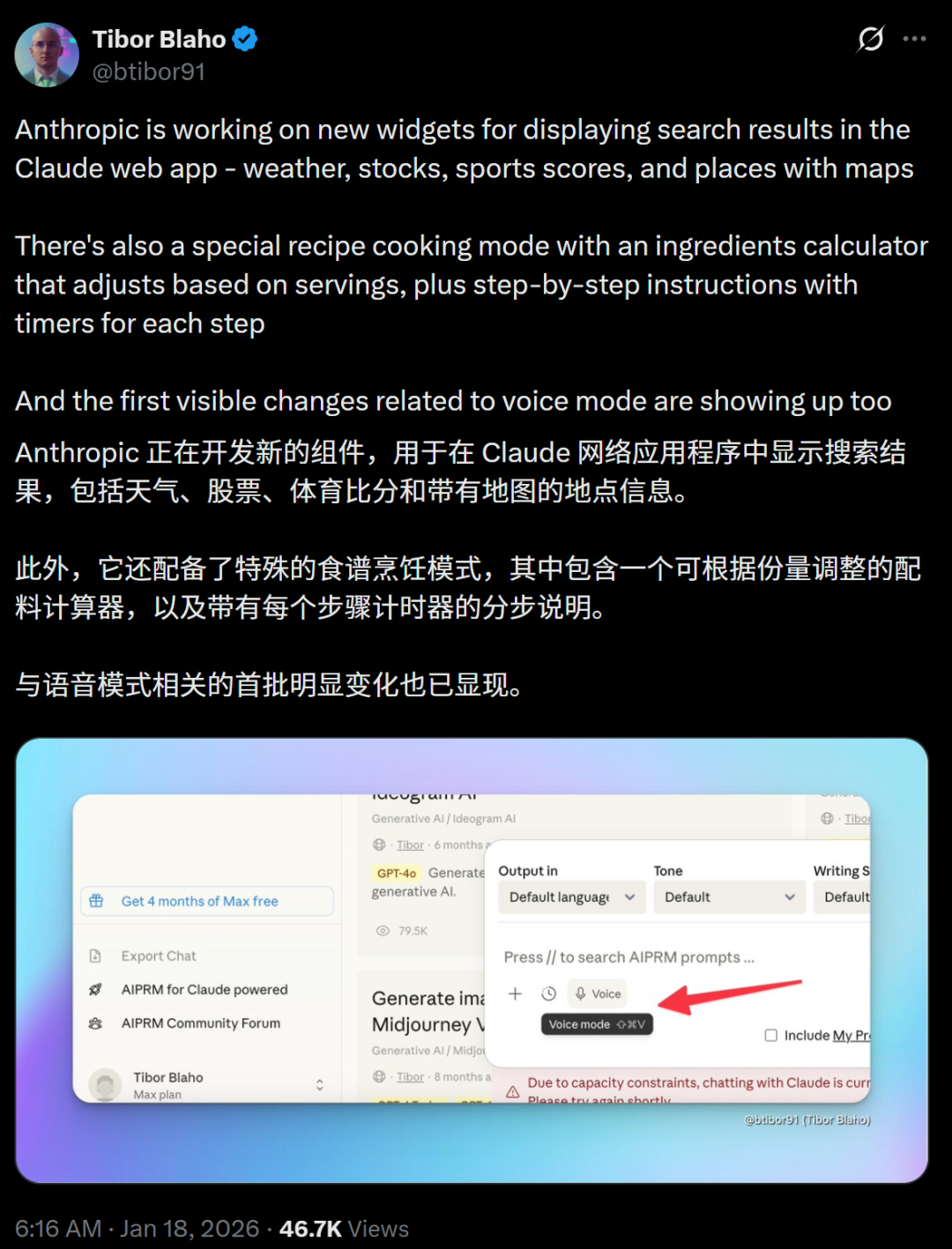
Some Reddit users who already have access to Cowork say the feature is rolling out slowly. The full release may take a while.
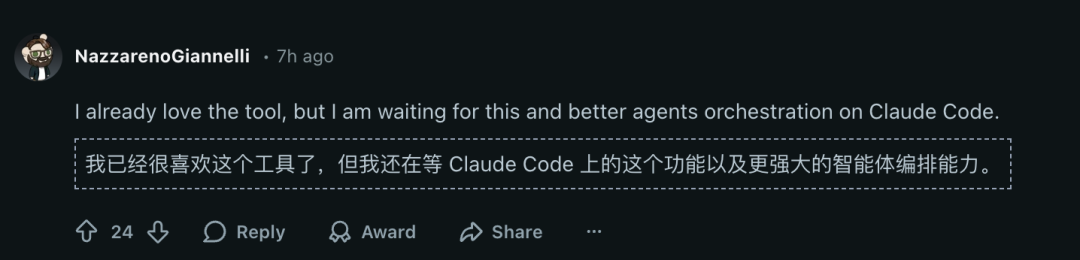
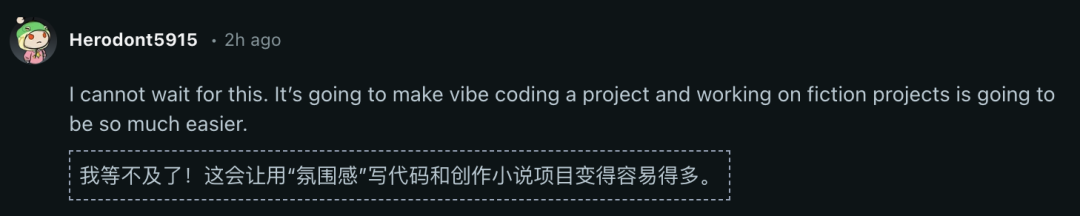

All of these changes point to one clear goal. Claude is becoming a true long-term partner. It will remember your projects, learn your habits, and grow with you over time.
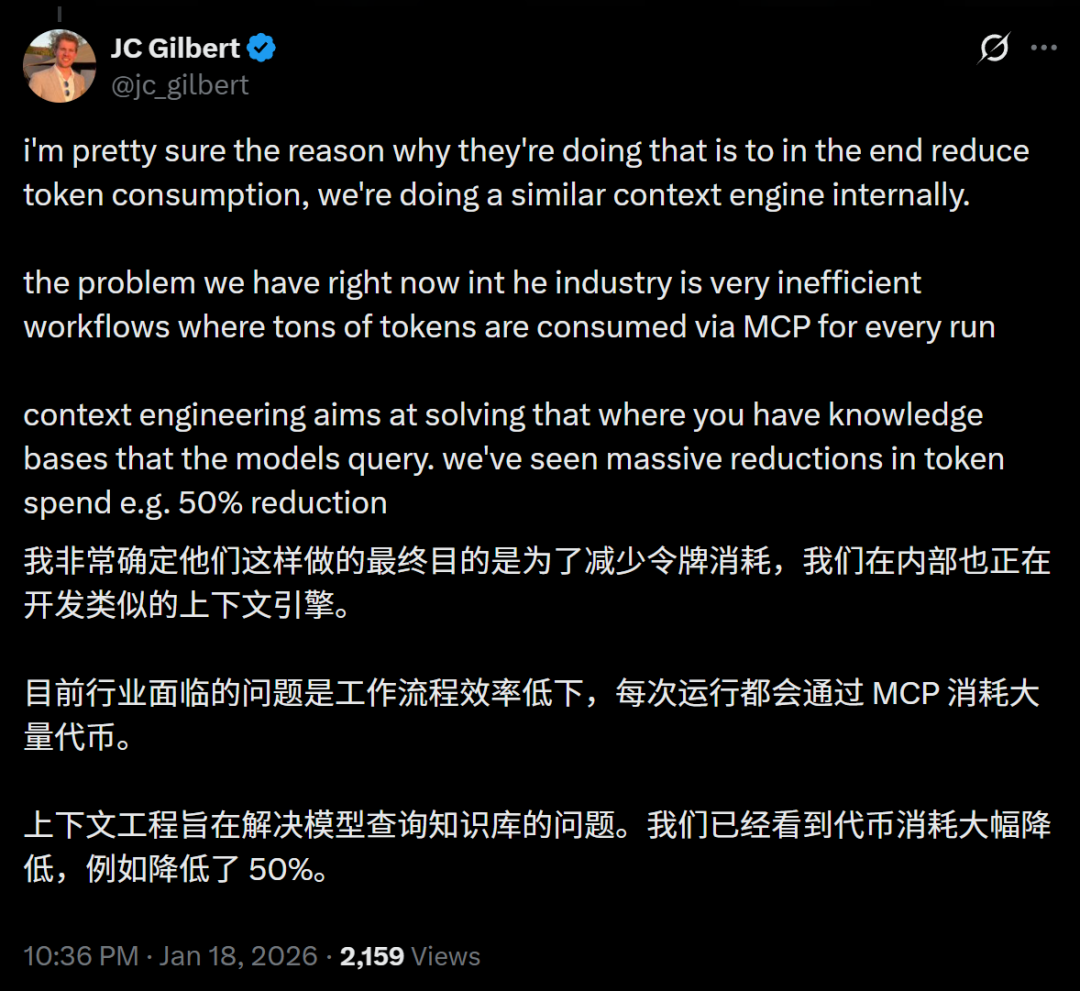
Some people in the AI community joke that their own companies are also testing similar features. They guess Anthropic’s real goal is to build a model with unlimited token memory.
Of course, Anthropic has not officially confirmed any of this yet.
 Knowledge Bases Give Claude a Real Memory
According to the leaked documents, Anthropic is building permanent memory for Claude Cowork.
This so-called knowledge base is a brand new memory system created by Anthropic for Claude.
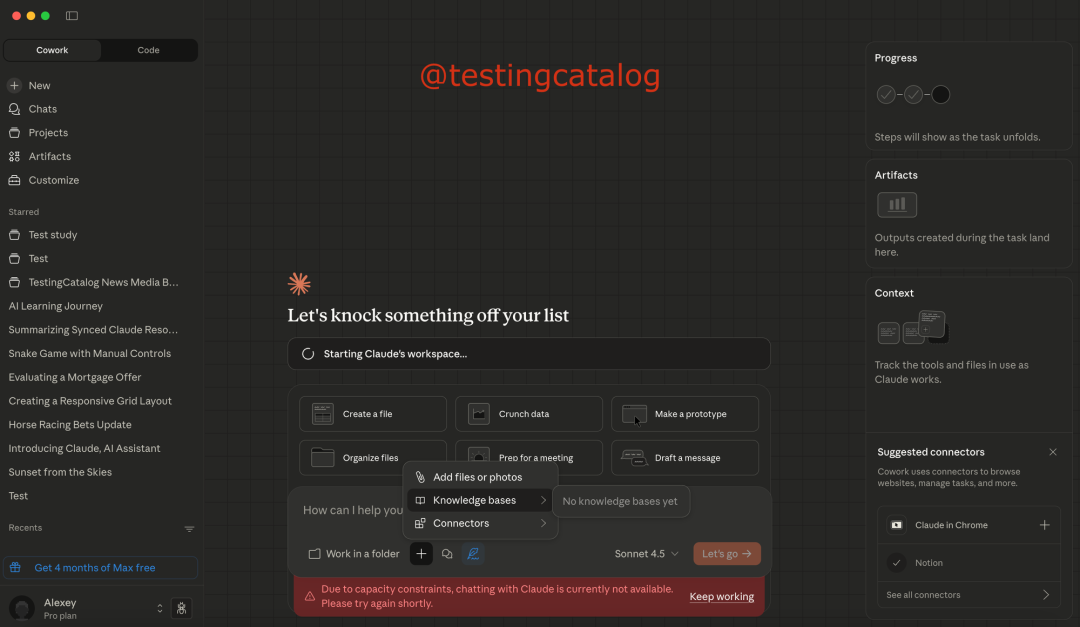
Simply put, a knowledge base is a long-term memory storage system.
This is something Claude Code never had. But Cowork is about to get it.
Internal documents explain how it works.
A knowledge base is a persistent memory storage unit. When answering questions, the system should first check if there is any background information related to the current task. If it finds a relevant knowledge base, it should pull information from that base. If the user provides new facts or summaries, the system should update the knowledge base with this new information.
In plain English, Claude will no longer treat each chat as a fresh start. Instead, it will automatically create a small notebook for each project. Every time you come back, it opens the same notebook and keeps writing.
When you start a new chat with Claude, it will no longer forget everything. If the current task is related to a past project, Claude will automatically open the relevant knowledge base and continue from where you left off.
More importantly, these knowledge bases are not just text ai pussy files.
If you tell Claude that you prefer a certain writing style, or that a specific tool is your favorite, or that a project has already been confirmed, Claude will record these facts in the right knowledge base.
In short, the more you use it, the smarter it gets.
This is a huge change.
Before, Claude only had a general memory that users could not control. Now, users can create and porn ai generator manage their own knowledge bases.
In the future, under Claude Cowork, you will be able to choose which knowledge base to use for each task.
For example, you could have a writing knowledge base, a project knowledge base, a file and workflow knowledge base, and so on.
Claude will automatically pick the right notebook for each task. You could even ask Claude to create a new knowledge base for a specific coworker.

Cowork Mode Becomes the Default
There is another very clear signal. Claude Cowork is becoming the default mode.
This means the traditional chat interface is fading away. Cowork is taking over.
From now on, Cowork will be the default workspace for future Claude users.
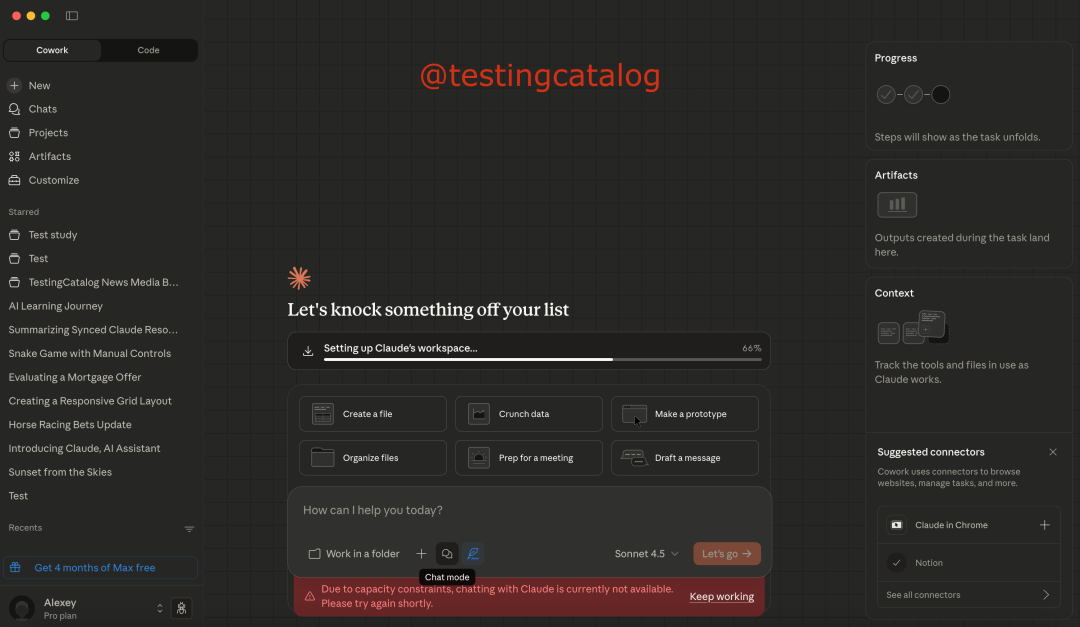
Switching to Chat Mode
Cowork is becoming a platform that combines chat, file management, auto-discovery of knowledge bases, and task execution.
Of course, if you still prefer the old chat style, you can still switch to chat mode inside Cowork.
But Anthropic’s message is clear. Chat mode is still there, but the real value is in the workspace.

The UI Is Also Changing. Goodbye to Lost Artefacts
At the same time, Claude’s user interface is getting a full makeover. No more lost Artefacts. Claude will get a dedicated Artefacts area so your work never disappears.
From now on, inside Claude, you can view, edit, and share your work more easily.
This means Claude is becoming more like a real workspace and less like a simple chat window.
The relationship with Claude is also changing. It is no longer just a question and answer tool. It is becoming a real project partner.
Enhanced Auto-Discovery and MCP Registry
There is also a key term mentioned in the leaks. MCP Registry.
This means Claude will soon be able to automatically discover and install official standard model plugins.
This is a big deal for Cowork’s auto-expansion ability.
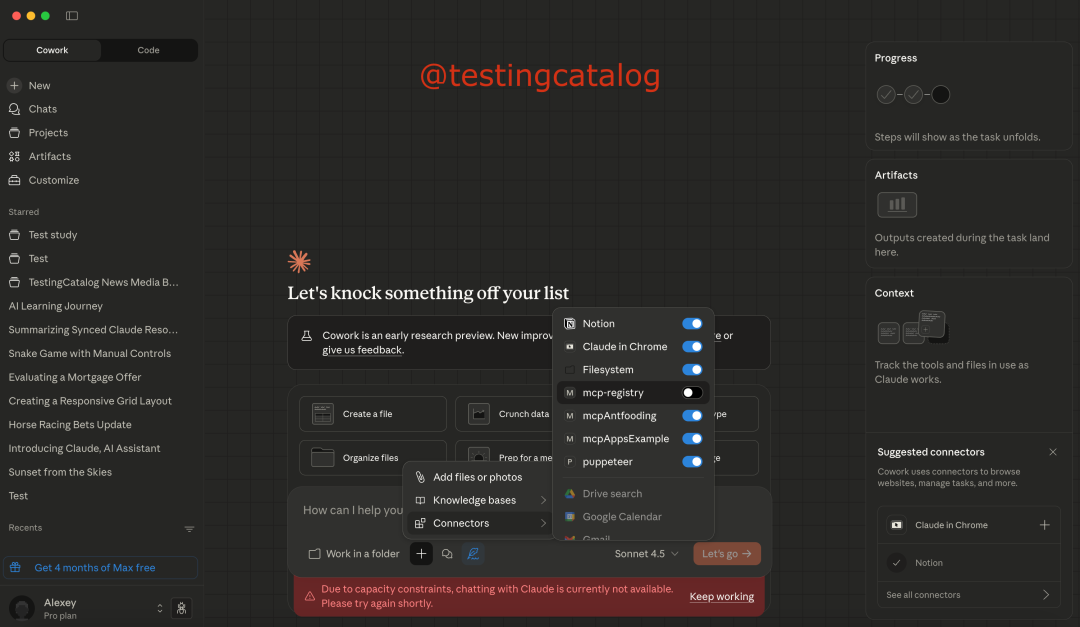
MCP Registry
Some people worry this is too dangerous. But for office workers, this is a huge win.
Because it means Claude Cowork will be able to connect to your calendar, your email, your project management system, and your tools.

Web Mode and Pixelate Video Feature
Besides the core features, Anthropic is not forgetting about fun either.
One of the new features is Claude Web mode.
According to the leaks, this mode is still in testing. But once it goes live, it means you will be able to use Claude while browsing the web in real time.
Another feature is called Pixelate.
This feature turns your video calls into pixel art style. It is already being tested in some apps.
Some people joke that while OpenAI is busy adding features, Anthropic is busy adding fun. But the truth is, behind the fun, Claude is building a complete model plus video usage system.
Permanent Memory Is the Real AI Coworker. Are You Ready
All these changes point in one direction. Anthropic is building a true AI coworker.
Not just a chatbot. Not just a tool. But a real partner that knows your projects, remembers your preferences, and gets things done.
Some people say that while ChatGPT and other models are still stuck in the save-and-recall stage, Claude Cowork is entering a whole new level. It is not just remembering. It is executing.
This wave is coming for everyone. The real battle in the AI world may be entering a brand new stage.
 The Year of Lifelong Learning
On a deeper level, Anthropic is using knowledge bases to solve the lifelong learning problem in AI. In other words, AI needs a memory.
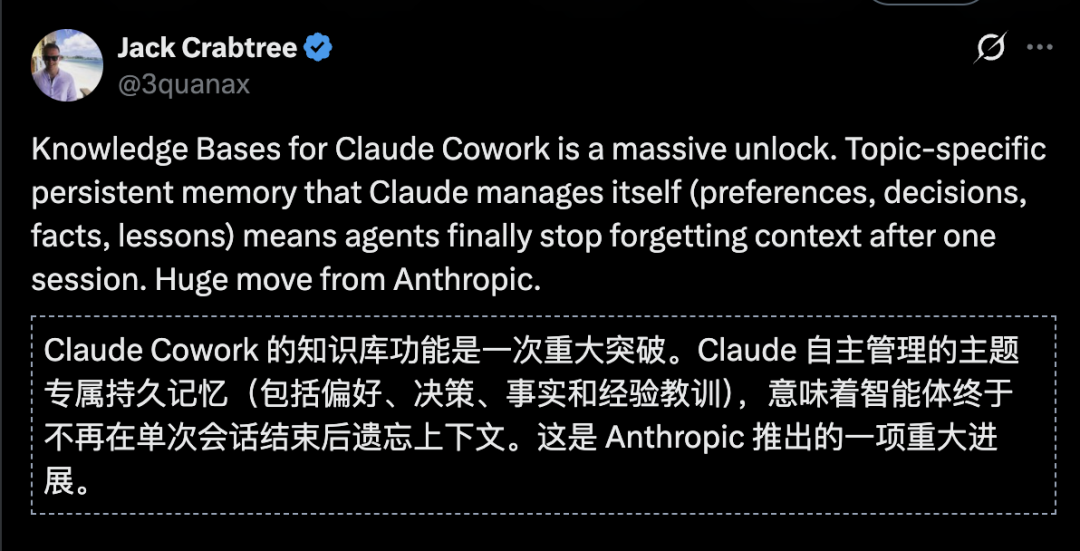
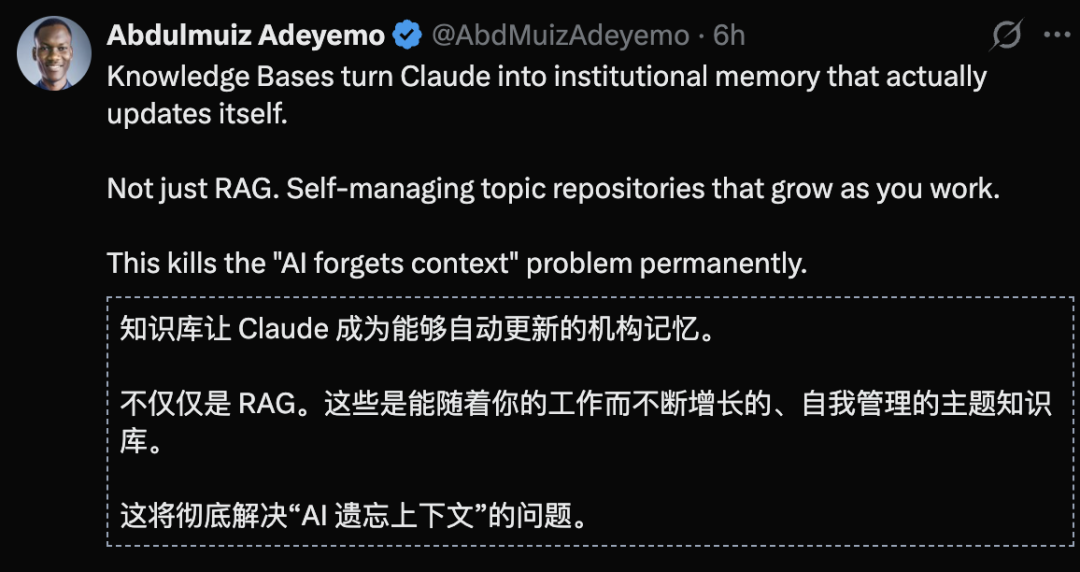
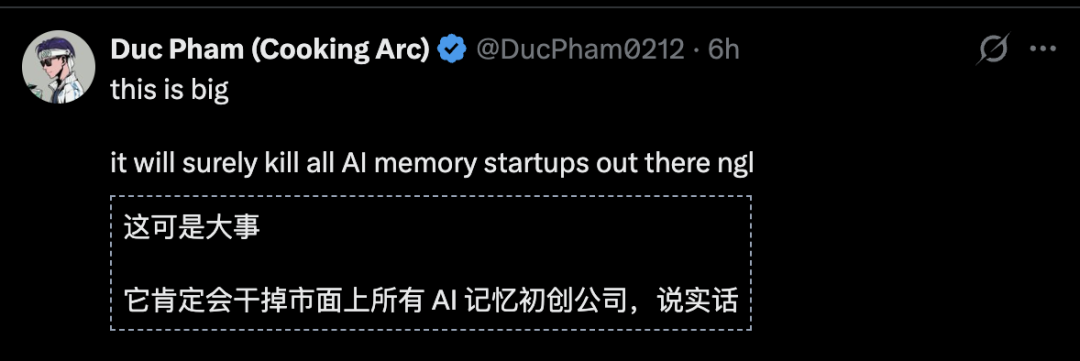
Last year, Anthropic CEO Dario Amodei said that lifelong learning is one of the hardest problems in AI.
Now, following Google DeepMind, the entire tech industry has reached the same conclusion. 2026 will be the year of lifelong learning.

On September 5, 2024, OpenAI first gave ChatGPT users a memory feature.
Now, Claude Cowork’s knowledge base is going even further than ChatGPT’s memory.

On April 10 last year, OpenAI upgraded ChatGPT’s memory feature across the board.
Before this, all memories were stored as a single list. Now, the system can reference past conversations and provide more relevant answers based on context.
Since then, ChatGPT’s memory has been improved many times.
But OpenAI has also said that persistent memory is not about storing more data. It is about building a true long-term relationship between the user and the AI. Only when AI has a real memory can it truly change how people work.
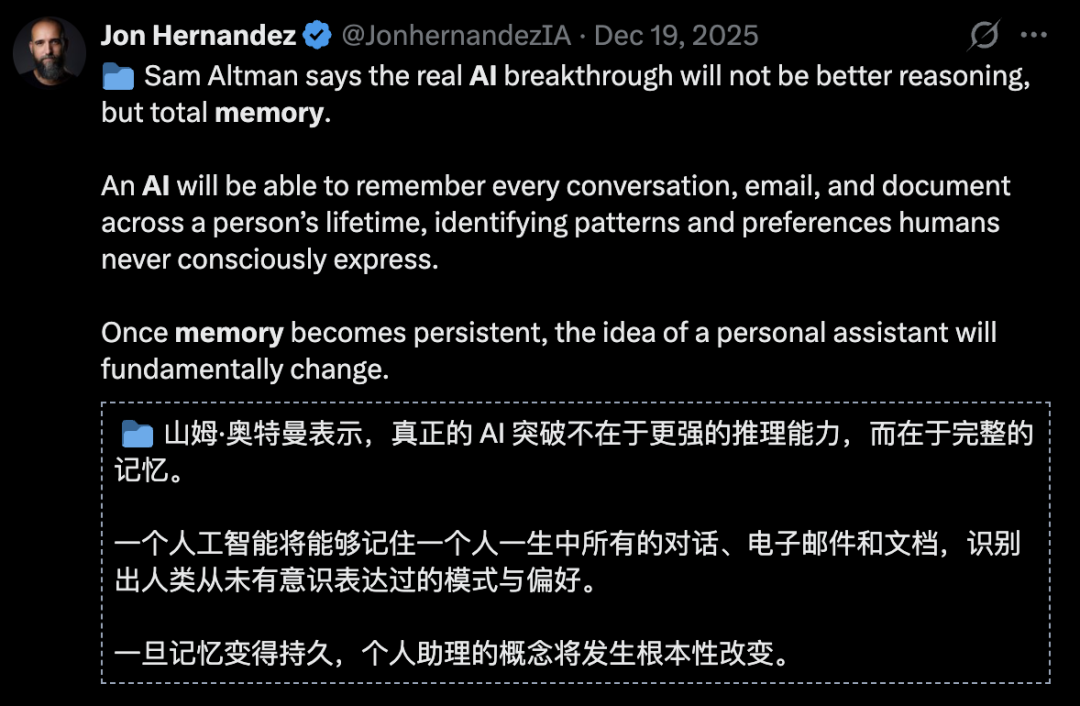
Google DeepMind’s Demis Hassabis has also said that to achieve true AGI, we must break through the memory wall. The first breakthrough will be lifelong learning, which he predicts will happen by 2026.
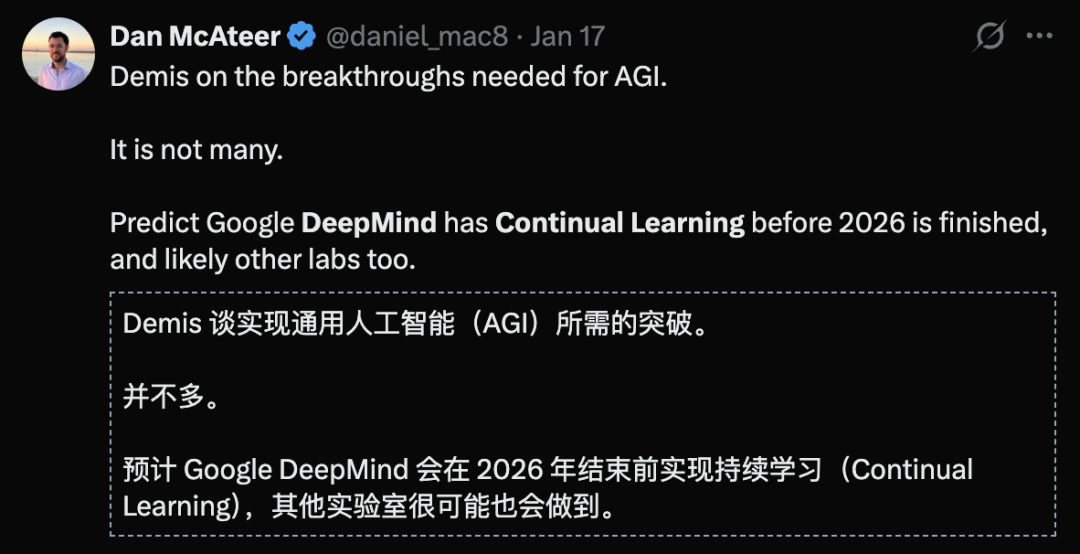
To solve the lifelong learning problem, Google DeepMind has launched several new AI architectures including Titans, Atlas, and Nested Learning.
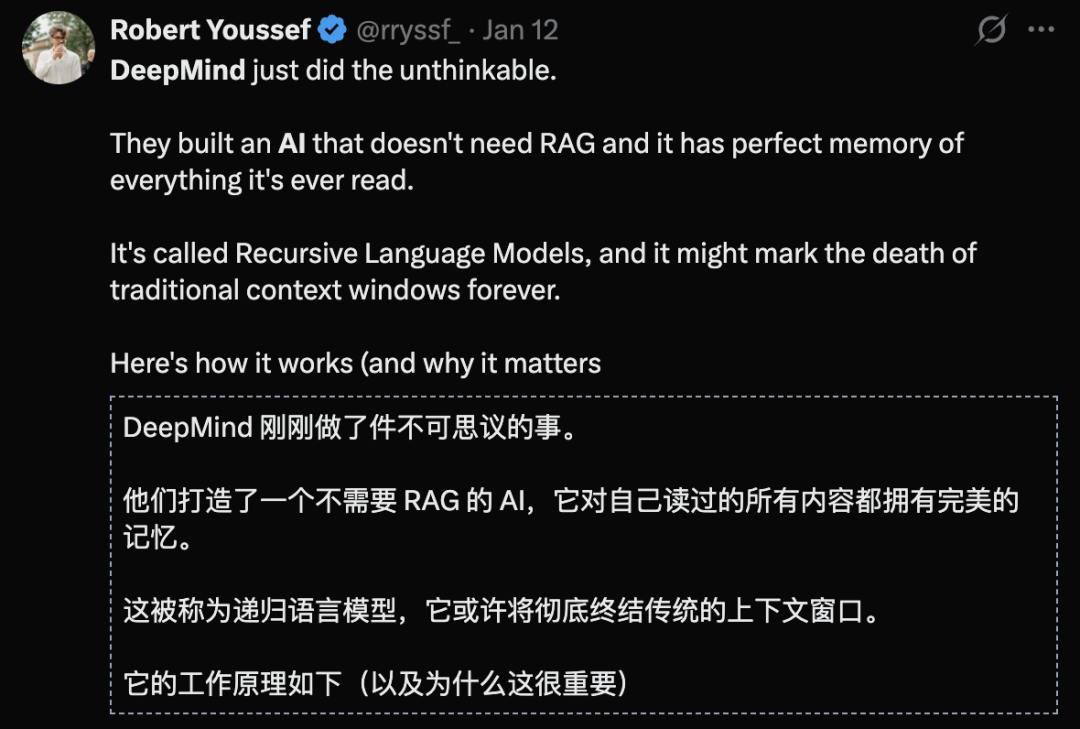
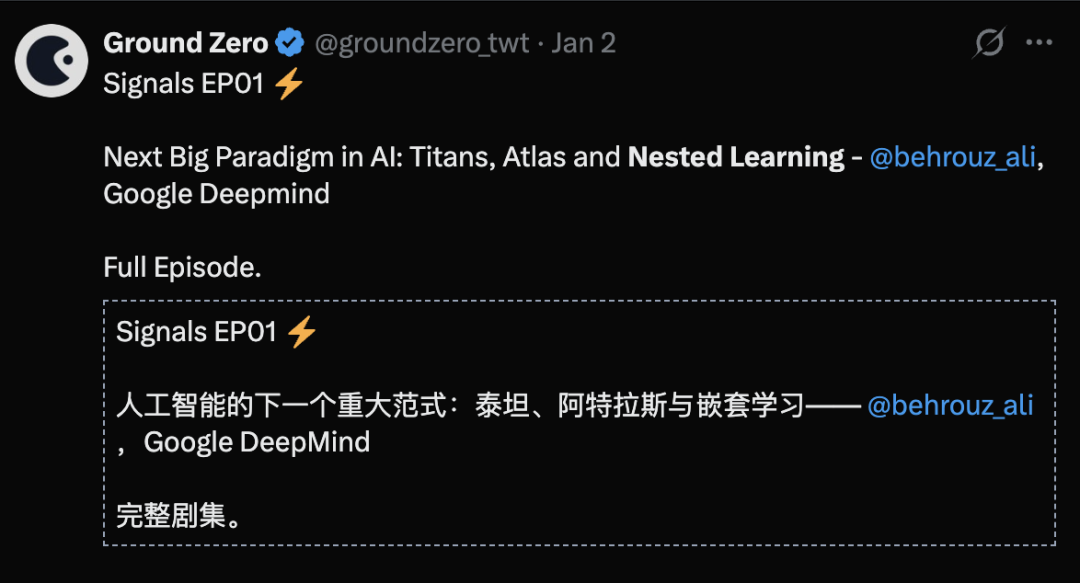
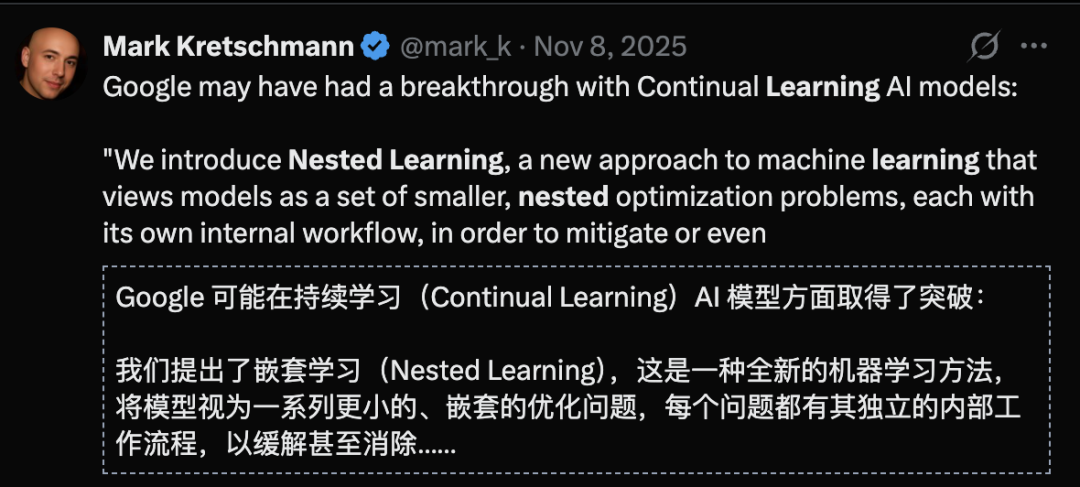
Nested Learning is especially important because it is seen as the key to breaking through the memory bottleneck in lifelong learning.
In the first stage of the race to AGI, the key question was not who had the best demo. It was who could build the most reliable infrastructure and tools. The real competition is just getting started.