
The Big News: OpenAI Is No Longer Just “Selling Models”
Today marks a turning point for OpenAI. The company that brought you ChatGPT is done being just a model provider. It wants to become the deployment layer of the AI economy — the company that actually puts AI to work inside your business.
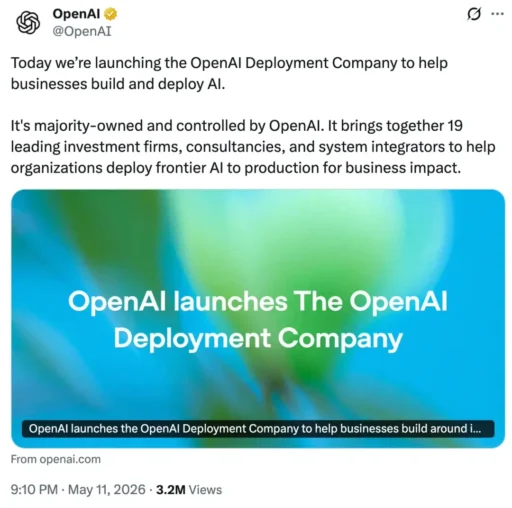
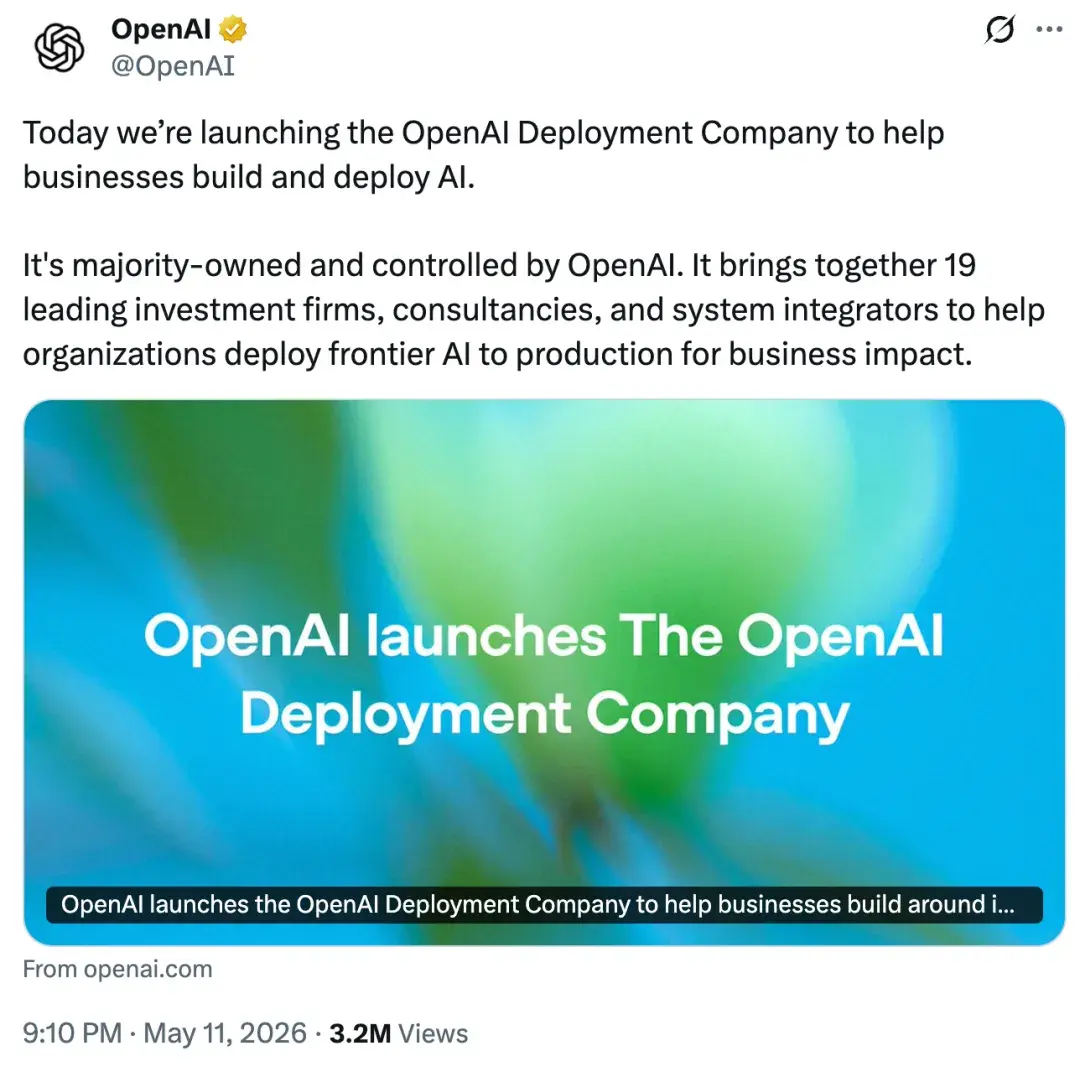
Last night, OpenAI announced the OpenAI Deployment Company, a new business unit with over $4 billion in initial investment. This isn’t a side project. OpenAI holds the majority stake and full control. The company brings together 19 leading investment firms, consulting companies, and system integrators to help organizations move from “experimenting with AI” to “running AI in production.”
The goal? Make sure artificial general intelligence (AGI) benefits all of humanity — by actually getting it into businesses that serve real people.
Why OpenAI Bought Tomoro: 150 Engineers Join on Day One
To make this happen fast, OpenAI agreed to acquire Tomoro, a UK-based applied AI consulting and engineering firm. This isn’t a talent grab for research scientists. Tomoro specializes in one thing: helping companies turn AI into real business advantages.
About 150 experienced forward-deployed engineers and deployment specialists will join the new company from day one. These aren’t people who just know how to call an API. They know how to redesign sales pipelines, rebuild customer support workflows, and restructure supply chains around AI capabilities.
Think about what this means. OpenAI isn’t just giving you the engine anymore. It’s offering to rebuild your entire car around that engine.
What Is a “Forward Deployed Engineer” (FDE)?
OpenAI is borrowing a playbook from one of the most successful enterprise software companies in history: Palantir.
Palantir built its empire by sending engineers deep into complex organizations — banks, hospitals, government agencies — and building deeply integrated software systems around data and decision-making. These engineers don’t sit in Silicon Valley writing code in isolation. They embed with teams, understand operations, and build systems that fit into messy real-world workflows.
OpenAI is now applying this same model to frontier AI. The Forward Deployed Engineers (FDEs) will:
-
Work alongside business leaders, operations teams, and frontline workers to find where AI creates the most value
-
Redesign organizational infrastructure around AI-ready workflows
-
Build production systems that connect OpenAI models to your data, tools, and business processes
-
Create sustainable systems that improve over time as new models and capabilities launch
Why Deployment Matters More Than the Model
Here’s something most people don’t understand about enterprise AI: The model is only 20% of the solution.
Building a powerful AI model is hard. But getting that model to actually change how a 10,000-person company operates? That’s much harder.
OpenAI knows this. Over one million businesses already use OpenAI products and APIs. Through these deployments, a clear pattern emerged: The next phase of enterprise AI depends on how effectively companies apply AI to real business scenarios.
As models get better at reasoning, executing tasks, and producing measurable results, companies can apply AI to bigger, more critical parts of their operations. The work now is helping organizations redesign key workflows around intelligent systems that can think, act, and deliver results you can measure.
How the Deployment Process Actually Works
So what does working with the OpenAI Deployment Company actually look like?
Phase 1: Diagnostic Focus The FDEs start by identifying where AI can create maximum value in your organization. This isn’t a generic audit. They work with your leadership and operations teams to find the specific workflows where AI makes the biggest difference.
Phase 2: Priority Selection Together with your team, they select a small number of high-priority workflows to redesign first. The key word is “small” — they focus on depth, not breadth.
Phase 3: Deep Build The FDEs embed inside your organization. They design, build, test, and deploy production systems that connect OpenAI models to your existing data, security controls, and business processes. The goal isn’t a pilot project. It’s a system your team uses every day.
Phase 4: Sustainable Evolution Because the Deployment Company operates as an extension of OpenAI, your systems get better automatically. When new models launch, when new tools become available, when new deployment patterns emerge — your systems evolve with them. You don’t have to rebuild from scratch every six months.
The Palantir Comparison: Why It Works
Industry watchers immediately compared this move to Palantir’s model. And the comparison is accurate — but with a crucial difference.
Palantir built its business around data integration and analytics. OpenAI is building around intelligent execution. The FDEs aren’t just helping you see patterns in your data. They’re helping you build systems that can reason about problems, make decisions, and take actions.
This is the difference between a dashboard that shows you sales trends and a system that automatically re-routes your supply chain when it detects a disruption. Between a report that lists customer complaints and an AI agent that resolves them in real-time.
OpenAI doesn’t want to be the company that sells you AI models. It wants to be the company that makes AI work inside your business.
Daybreak: OpenAI’s Cybersecurity “Morning Light”
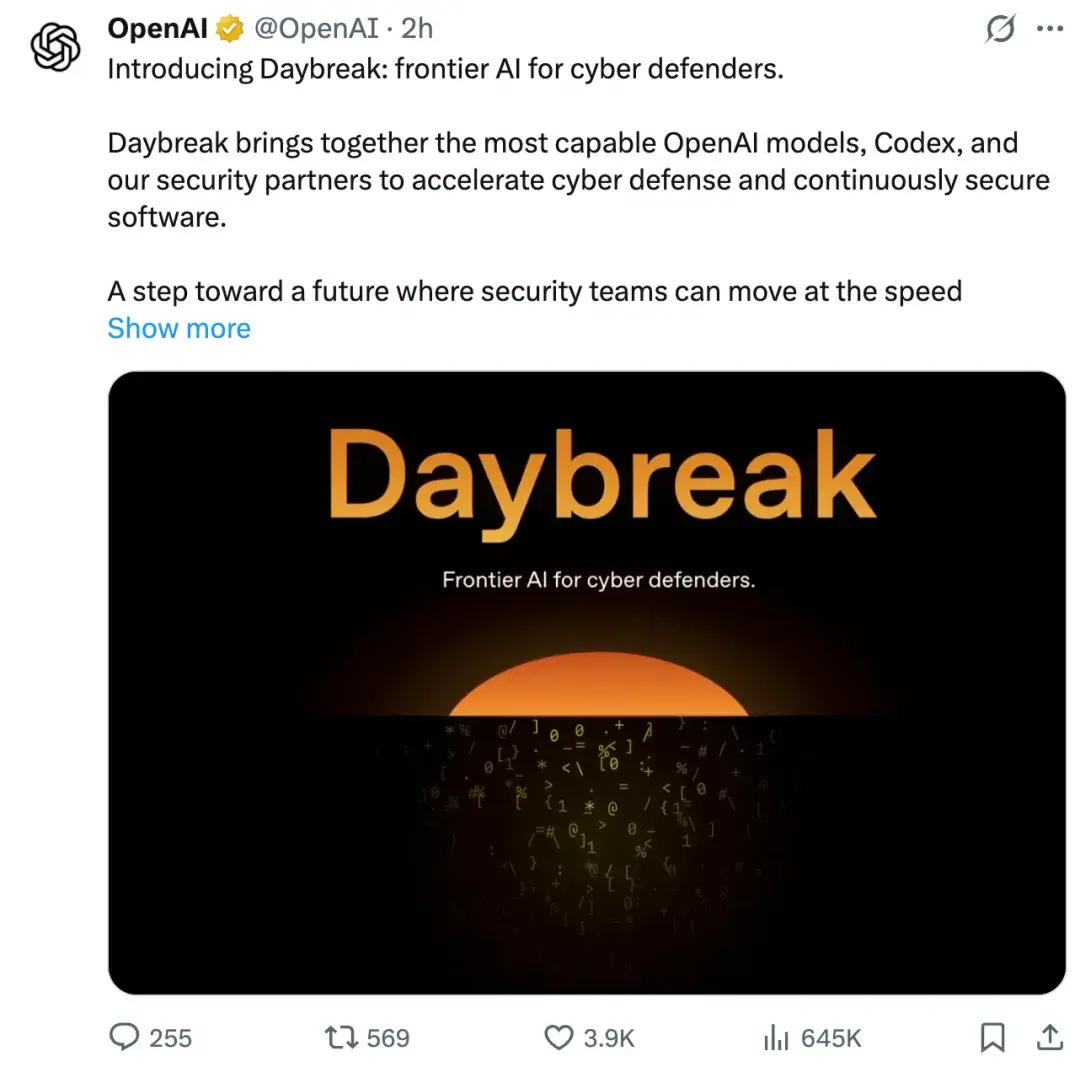
If the Deployment Company wasn’t enough news for one day, OpenAI also unveiled Daybreak — a frontier AI system built specifically for cyber defense.
The name is intentional. Daybreak means the first light of morning. For cybersecurity, it means finding risks earlier, acting faster, and building software that is resilient from the very first line of code.
What Daybreak Actually Does
Daybreak combines three powerful elements:
-
OpenAI’s most advanced models — for reasoning about complex code and security scenarios
-
Codex — OpenAI’s agentic coding tool that can actually write, review, and modify code
-
A network of security partners — bringing real-world security expertise into the system
The result? A system that helps security teams move at the speed of attackers.
Daybreak’s Core Capabilities
Daybreak isn’t just another security scanner. It can:
-
Reason across entire codebases to find subtle vulnerabilities humans might miss
-
Identify security flaws earlier in the development process — before they reach production
-
Verify patches to make sure fixes actually work and don’t create new problems
-
Analyze unfamiliar systems quickly, even when your team has never seen that technology stack before
-
Guide detection and response when threats emerge
-
Perform dependency risk analysis to find weak points in your software supply chain
-
Integrate security into daily development workflows instead of treating it as a separate step
Why Sam Altman Calls This a “New Era” for Security
Sam Altman, OpenAI’s CEO, didn’t mince words: “The launch of Daybreak is our effort to accelerate cyber defense and continuously secure software. AI is already excellent at cybersecurity and is about to get much stronger. We want to start working with as many companies as possible now to help them stay secure continuously.”
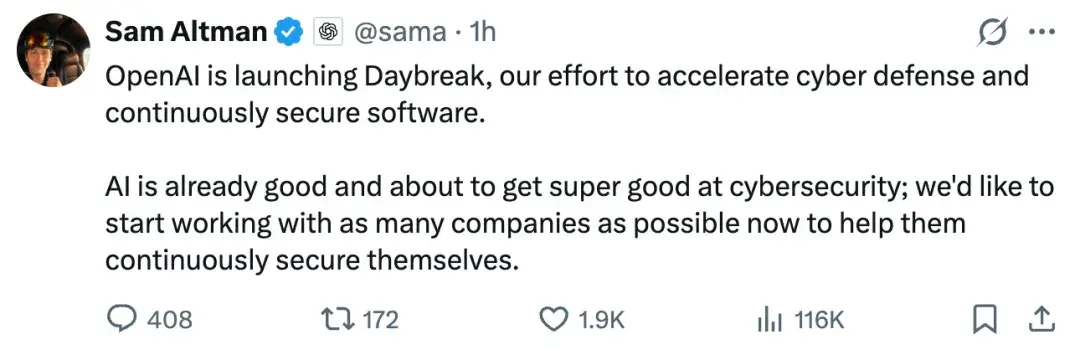
The vision behind Daybreak is ambitious: The next era of cyber defense should have protection built into software from the start. Not just finding and fixing bugs, but designing systems that are inherently resistant to attacks.
The Trust and Safety Balance
OpenAI knows the same AI capabilities that help defenders can also help attackers. That’s why Daybreak combines expanded defensive capabilities with:
-
Trust and verification systems
-
Proportionate safeguards
-
Accountability mechanisms
The goal isn’t just to make security teams faster. It’s to make the entire software ecosystem more secure by design.
The Trust and Safety Balance
OpenAI knows the same AI capabilities that help defenders can also help attackers. That’s why Daybreak combines expanded defensive capabilities with:
-
Trust and verification systems
-
Proportionate safeguards
-
Accountability mechanisms
The goal isn’t just to make security teams faster. It’s to make the entire software ecosystem more secure by design.
Why This Matters for Every Business Leader
If you’re running a business — any business — these two announcements change the competitive landscape.
The Deployment Company Means:
-
AI implementation is no longer DIY. You don’t need to hire a team of PhDs to get value from AI. OpenAI is offering to embed experts in your organization.
-
The gap between AI leaders and laggards will widen fast. Companies that deploy AI deeply into operations will pull ahead of those still running pilots.
-
Your competitors might already be doing this. With 19 major partners and $4 billion in funding, this isn’t an experiment. It’s a scale play.
Daybreak Means:
-
Security is becoming an AI-powered arms race. If your security team isn’t using AI, they’re fighting attackers who are.
-
Software security is moving left — meaning security happens during development, not after deployment.
-
The cost of breaches is about to get even higher for companies that don’t modernize their defense.
The Bigger Picture: OpenAI’s Master Strategy
Put these two announcements together, and you see OpenAI’s complete strategy:
Step 1: Build the most capable AI models (GPT-4, GPT-5, and beyond) Step 2: Create tools that let AI act in the world (Codex, agents, APIs) Step 3: Embed AI directly into how businesses operate (Deployment Company) Step 4: Secure the entire ecosystem so businesses can trust AI systems (Daybreak)
OpenAI isn’t just building AI. It’s building the infrastructure for an AI-powered economy.
What Industry Experts Are Saying?
Reactions to both announcements were immediate and strong.
On the Deployment Company, tech analysts noted that OpenAI is essentially saying: “We don’t trust most companies to implement AI correctly on their own, so we’re going to do it for them.” This is both an opportunity and an implicit criticism of how slowly most enterprises have moved.
On Daybreak, security professionals expressed excitement mixed with caution. One analyst noted: “OpenAI just reshaped everything again. With Daybreak, you have a tool that can exponentially improve code base security. Many previously undiscovered issues can now be identified and resolved, leading to much safer products.”
But others raised important questions: Will Daybreak create dependency on OpenAI for security? Will it centralize too much security decision-making in one company’s AI systems? These are questions that will play out over the coming years.
What Should Your Business Do Now?
If you’re a business leader reading this, here are three immediate actions to consider:
1. Evaluate Your AI Readiness The Deployment Company will work with organizations that are ready to commit. Before reaching out, assess which workflows in your business are ready for AI transformation. Look for processes that are repetitive, data-intensive, and currently create bottlenecks.
2. Audit Your Security Posture Daybreak represents a new standard for AI-powered security. Even if you don’t adopt Daybreak immediately, understand that AI-driven security tools are becoming the baseline. If your security team isn’t experimenting with AI-assisted tools, start now.
3. Think About Data Infrastructure Both the Deployment Company and Daybreak require connecting AI to your existing systems. Companies with clean, accessible data and well-documented processes will get value faster. Companies with data silos and technical debt will struggle. Fix your foundation before trying to build on it.
OpenAI’s two announcements send one clear message: AI is no longer a toy or an experiment. It’s becoming core business infrastructure.
The Deployment Company exists because OpenAI believes most businesses can’t implement AI effectively on their own. Daybreak exists because OpenAI believes security must be built into AI systems from the ground up.
Together, they represent OpenAI’s bet that the companies that win the next decade will be the ones that deeply integrate AI into every part of their operations — and do it securely.